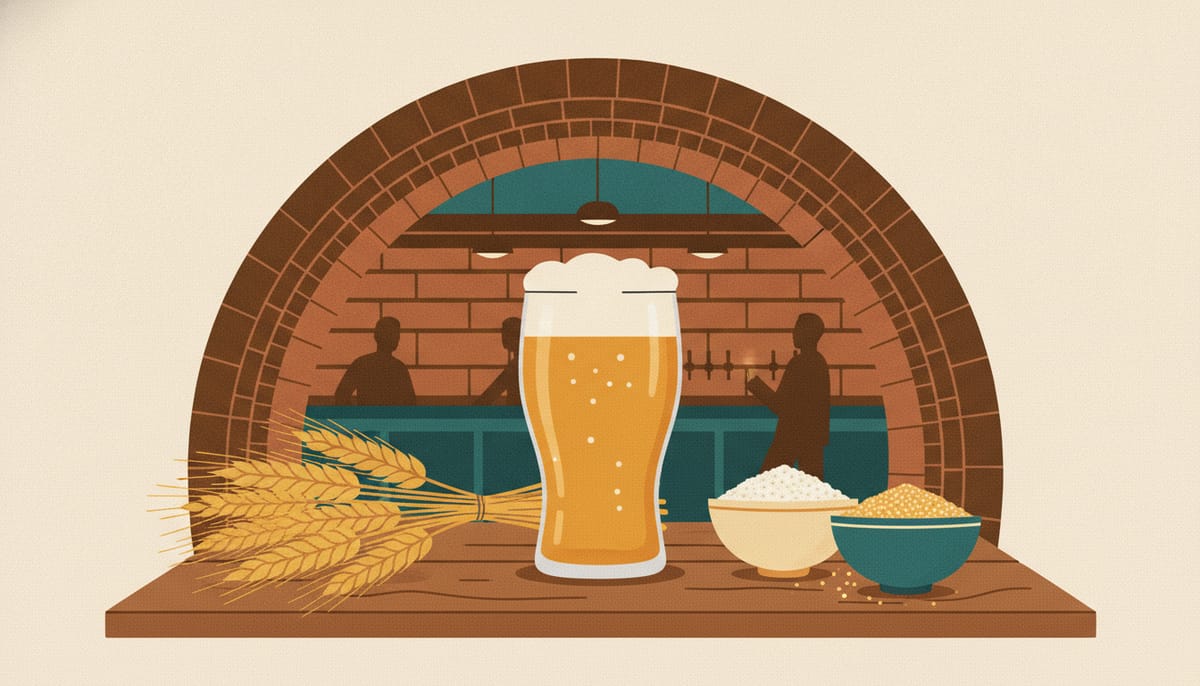
It's one of the most common dietary questions we get asked before a Beer Mile afternoon, right after "is there gluten-free food?" — is beer actually gluten free? The honest answer is no, not by default: the vast majority of beer poured in Britain's taprooms, ours included, is brewed from barley or wheat, both of which contain gluten. But that's not quite the end of the story, because there's a real and growing distinction between beer that's genuinely gluten-free, beer that's "gluten-reduced", and beer that's simply off the table if you're coeliac. Here's how to tell the difference, and where to find proper gluten-free options in London.
The short answer
No — traditional beer is not gluten free, because it's made from malted barley (and often some wheat), both gluten-containing grains. What you will find on the market is a smaller but growing category of genuinely gluten-free beer, brewed from alternative grains like sorghum, millet, rice or buckwheat, plus a separate category of barley-based "gluten-reduced" beer that's been treated to break down most of its gluten. As we'll get into, that's not quite the same thing, and UK and EU labelling rules treat the two very differently.
Why beer contains gluten in the first place
Brewing starts with malting: barley is soaked, allowed to germinate briefly, then dried in a kiln, which develops the enzymes needed to convert its starch into fermentable sugar. That malted barley is then mashed with hot water, and it's this mash liquid — the "wort" — that carries the barley's proteins, gluten included, straight through the rest of the process and into the fermenter. Wheat beers, such as witbiers and hefeweizens, add even more gluten on top by using a proportion of malted wheat alongside the barley. Crucially, this has nothing to do with colour, strength or style: a pale lager and a dark stout are both typically brewed from gluten-containing grain, so neither is safer than the other by default. For the full step-by-step version of this process, our how is beer made guide walks through mashing, boiling and fermenting from scratch.
"Gluten-free" vs "gluten-reduced": what's the actual difference
This is where most of the confusion comes from, and it's worth understanding properly if you're managing a gluten intolerance. A number of mainstream barley-based beers are now brewed using an enzyme treatment (commercially, products like Brewers Clarex are typical) that breaks down the long gluten protein chains into much smaller fragments. That can bring the beer's measured gluten content below the 20 parts per million (ppm) threshold used to define "gluten-free" foods under UK and EU law — but crucially, food safety authorities generally don't allow these enzyme-treated barley or wheat beers to be labelled "gluten-free". Instead, you'll usually see wording like "gluten removed" on the can. The reason is that the standard test used to measure gluten (an ELISA-based assay) is designed to detect intact gluten protein, and can't reliably confirm that the broken-down fragments left behind by the enzyme are actually harmless. In other words, a low reading on that particular test isn't the same guarantee it is for a beer that never contained gluten to begin with.
Is gluten-reduced beer safe if you have coeliac disease?
This bit really isn't ours to promise one way or the other, and we'd rather be upfront about that than guess. Coeliac UK and similar bodies generally advise treating "gluten removed" barley or wheat beer with caution rather than as a guaranteed-safe option, precisely because of the testing limitation above. If you have coeliac disease or a diagnosed gluten intolerance, the safest approach is to check current guidance from Coeliac UK or your own GP or dietitian, and to lean towards beers brewed from naturally gluten-free grains — or a different drink altogether — rather than relying on a "gluten removed" label alone. None of this is medical advice; it's just brewing context, so please treat your own health guidance as the final word.
Genuinely gluten-free beer: what to look for
The more reliable category is beer brewed entirely from grains that never contained gluten in the first place — typically sorghum, millet, buckwheat, rice or corn (maize), used in place of barley and wheat rather than as an add-on. Because there's no gluten in the ingredients to begin with, there's nothing to remove or break down afterwards, which is a meaningfully different (and generally more trusted) approach than the enzyme-treatment route above. The flavour and body can differ slightly from a classic barley-based pale ale or lager — sometimes lighter, occasionally with a faint cidery note — though plenty of drinkers can't pick it out in a blind tasting. Brands sold in the UK include Green's (a range of Belgian-brewed gluten-free beers), Bellfield Brewery (an Edinburgh brewery producing gluten-free beer exclusively), and various imported gluten-free lagers. Availability varies quite a bit by shop and bar, so it's always worth checking a specific brewery's own stockist list before making a special trip.
How to spot gluten-free beer when you're out
- Read the can or bottle carefully. "Gluten-free" and "gluten removed" are not the same claim, even though they sit close together on a shelf.
- Ask bar staff directly which category a particular beer falls into — most independent bars and taprooms know their own stock well.
- Check the brewery's own allergen information, usually published on their website alongside other dietary details.
- Consider cider as a genuinely gluten-free fallback almost anywhere, since it's made from apples rather than grain.
- When in doubt and strictly avoiding gluten, treat any unlabelled draught beer as containing gluten by default.
Gluten-free drinking on the Bermondsey Beer Mile
This is one dietary question where we'd rather be upfront than overpromise. The independent taprooms along the Bermondsey Beer Mile brew predominantly barley- and wheat-based beer, like most of London's craft scene, so genuinely gluten-free options aren't guaranteed at every stop on a given day. If you're coeliac or strictly avoiding gluten, do flag it when you book our Bermondsey Beer Tasting Tour — 2–3.5 hours, £49pp, four taprooms, beer included at every stop, meeting at Southwark Brewing Co, 46 Druid St — and our guides will point out any gluten-free, gluten-removed or cider options that happen to be pouring that day. We can't guarantee a gluten-free beer at every single taproom, but we'll always do our best to steer you right, whether you're joining a public date or one of our private groups from 6 up to 60+.
Related reading
If dietary questions like this interest you, our is beer vegan guide covers a similar "read the label carefully" problem with animal-derived finings. For the style side of things, see our lager vs ale and what is craft beer explainers, and if you want the numbers on exactly what's in your pint, our units in a pint of beer guide is a good companion piece.
Make a full day of it
Pair a Beer Mile afternoon with our free self-guided heritage walk through Southwark's brewing history, or treat someone with an interest in gluten-free drinking to a gift voucher — delivered instantly by email and never expire, so they can pick their own date and ask us about that day's options themselves.