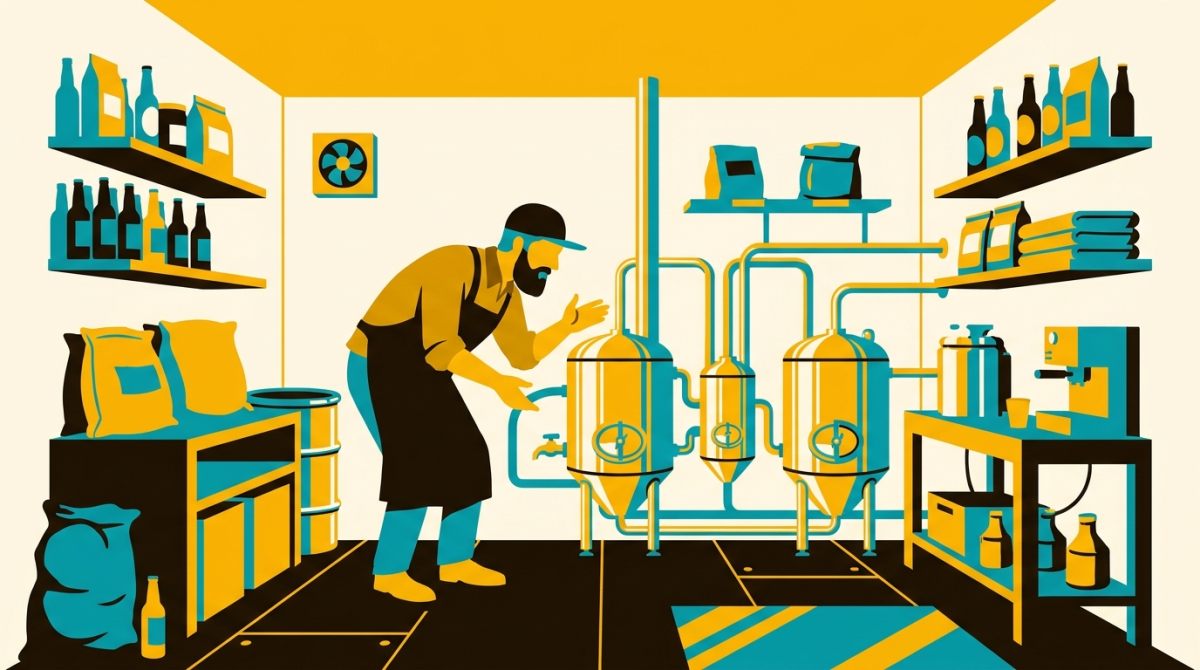
We get asked "so is this actually a microbrewery?" on nearly every tour we run, usually while standing in front of a set of steel tanks in a railway arch. It's a fair question, because "microbrewery" gets used loosely - sometimes correctly, sometimes as a catch-all for anything small and independent, and sometimes as a marketing word slapped on something that's neither micro nor especially craft. Having spent over a decade taking people round London's independent brewery scene since 2014, here's the plain-English version of what the term actually means, how it fits alongside nano, regional and macro breweries, and why it isn't quite the same thing as "craft".
The short answer: it's mostly about scale
At its core, a microbrewery is a small, independently owned brewery producing beer at a fraction of the volume of a national or multinational brewer. There's no single, universally agreed cut-off - definitions vary between industry bodies, countries and even different pieces of tax legislation - but the common thread is scale: a microbrewery is small enough that the people who own it are usually still directly involved in brewing, running the taproom, or both. It's a useful mental shortcut rather than a strict legal category, and our guide to what is craft beer covers the closely related, but distinct, question of what makes beer "craft" in the first place - worth reading alongside this one, since the two terms get tangled up constantly.
The size ladder: nano, micro, regional, macro
It helps to think of UK breweries sitting on a rough ladder by output, even though the exact numbers at each rung are debated and shift over time as breweries grow:
- Nanobrewery - the smallest commercial tier, often on kit not far removed from an ambitious homebrew setup, sometimes brewing just a few hundred litres at a time for a single local pub or taproom.
- Microbrewery - small and usually single-site, but operating at a scale that supports a proper taproom, some local pub and bottle shop accounts, and often a handful of staff beyond the founders. This is the tier most of the working breweries you'll find in London's railway arches sit within.
- Regional brewery - bigger again: still independently owned in most cases, but self-distributing more widely, sometimes running a small estate of pubs, and often decades older than the newer micro scene.
- Macro / national brewery - industrial-scale production for supermarket shelves and pub chains across the country or internationally, typically owned by, or part of, a large drinks group.
Where exactly the lines fall between these tiers is genuinely contested - UK bodies like SIBA (the Society of Independent Brewers) and duty-relief legislation both use output thresholds for their own purposes, and those figures don't always match up with how drinkers use the words day to day. If you need a precise, current threshold for a specific purpose, it's worth checking the relevant body's own site rather than relying on a rough number here.
Micro and craft aren't the same thing
This is the mix-up we hear most often. "Micro" describes size; "craft" describes an approach - independence of ownership, ingredient-led recipes, and a focus on flavour and experimentation over mass-market consistency. The two overlap a lot in practice, because most craft breweries start out genuinely tiny. But they're not interchangeable: a brewery can grow well past microbrewery scale, or be bought by a larger drinks group, and still market itself as craft on the strength of its recipes and branding. Equally, plenty of very small breweries brew perfectly conventional, unadventurous beer with no particular craft ethos behind it - being small doesn't automatically make a beer interesting. If you want the fuller picture on where that line sits, our explainer on what actually counts as craft beer goes into the independence and ownership questions in more depth.
Why the distinction still matters to drinkers
Knowing roughly where a brewery sits on that size ladder tells you something useful before you've even tasted the beer. A microbrewery is far more likely to be brewing in small, frequently changing batches, selling much of its output through its own taproom, and happy to talk you through exactly how a beer was made if you ask. A macro brewer, by contrast, is optimising for consistency at enormous scale - which is its own kind of skill, but a very different one. Neither is inherently "better"; they're just doing different jobs. It's the same reason we built our tours around the smaller end of that ladder rather than the big, familiar names - there's something worth seeing in a brewery you can walk right round in five minutes.
What visiting a microbrewery is actually like
If you haven't been to one, it's usually less formal than a pub and more direct than you'd expect. Most working microbreweries we visit on our tastings sell straight to the public through an on-site taproom set up in or next to the brewhouse itself, so you're often only a few metres from the tanks the beer fermented in the week before. Counter service, simple bench seating, and staff who genuinely know which beer on the board is freshest is the norm rather than the exception. We've written a full explainer on what a taproom actually is if you want to know what to expect before you turn up at one for the first time - tasting flights, how paying usually works, and the general etiquette.
How a microbrewery actually makes beer
Scale changes the equipment, but not the basic process. Whether you're looking at a 5-barrel nano setup or a much bigger regional brewery's kit, beer still goes through the same core steps: malted grain is mashed to extract fermentable sugars, the resulting liquid (wort) is boiled with hops, then cooled and fermented with yeast before conditioning and packaging. What changes at microbrewery scale is mostly visibility - smaller kit means you can usually see the whole process from mash tun to fermenter in one glance, which is part of why taproom visits feel so much more hands-on than a factory tour. If you want the full walk-through, our guide to how beer is made covers each stage in plain English.
Some names you'll come across
The UK's beer scene has no shortage of breweries that started life as tiny microbreweries and grew from there - some staying independent, others eventually being bought by larger groups. Rather than name specific breweries and their current ownership or output here (both of which change hands and change size more often than you'd think), our best advice is to treat any given brewery's "micro" or "craft" label as a starting point for a question, not a guarantee - a quick look at a brewery's own about page will usually tell you honestly where it sits today. Our roundup of London's best breweries, area by area covers a wider set of genuinely independent, smaller-scale names worth seeking out across the city if you want a practical list rather than a definitions lesson.
Our tours: built around microbreweries, not big names
All three of our tours are deliberately built around small, independent breweries rather than the well-known national names. Our flagship Bermondsey Beer Tasting Tour takes you through four working taprooms along the railway arches for £49pp, on a guided 2 to 3.5-hour tasting that starts at Southwark Brewing Co on Druid Street and includes the beer itself. Our Cheese, Meat & Beer Tour runs on Saturdays from 12 to 2:30pm for £65pp and pairs the same independent-brewery focus with proper food, and our Hackney Wick Craft Beer Experience is a tighter two-hour session in east London for £41.25pp on selected Saturdays. All three work for private groups of 6 to 60 or more - see our private and group tours page for details.
Gifting a microbrewery day out
If someone in your life keeps asking "so what actually makes a brewery a microbrewery?", a tour is a more memorable answer than an explainer article. Our gift vouchers are bought directly on our vouchers page, delivered by email instantly, and never expire, so the recipient can pick whichever of our three tours and whichever Saturday suits them best.
The short version, if you only remember one thing: "microbrewery" is a statement about scale, not quality or style, and it's a different question entirely from whether a beer is "craft". Both are worth understanding if you want to talk about beer with any confidence - but the far more enjoyable way to learn the difference is standing in an actual taproom with a glass in hand.