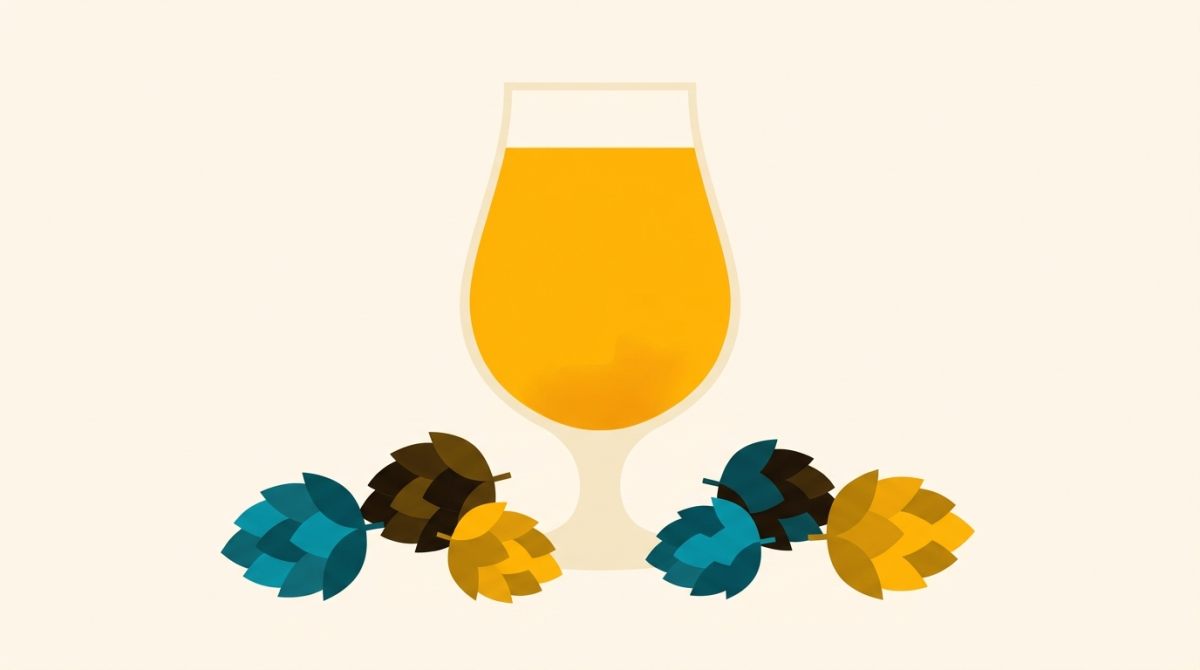
If you've ever been handed a pint that looks more like orange juice than beer and wondered whether something's gone wrong with it, you've met a hazy IPA. We pour these constantly on our tastings, and it's still the single most common question guests ask before they've even taken a sip: "is it meant to look like that?" It is. In our what does IPA stand for guide we cover India Pale Ale from first principles; this post is about the specific, cloudy, juice-like branch of the family that's taken over taproom taps across London.
So what actually is a hazy IPA?
A hazy IPA — also called a New England IPA, or NEIPA — is an India Pale Ale brewed to be deliberately cloudy, with a soft, almost creamy body and an intense wall of hop aroma, but noticeably less bitterness than a traditional IPA. The haze isn't a mistake, a fault, or a sign the beer needs longer to settle. It's a direct result of how the beer is brewed, and in this style it's considered a feature rather than something to filter out.
Compared with a classic, clear "West Coast" style IPA, a good hazy IPA trades sharp, resinous bitterness for big fruity hop flavour — think mango, stone fruit, citrus pith and pineapple — carried on a soft, almost silky mouthfeel. It's a genuinely different drinking experience, not just a cosmetic difference, which is part of why the style split opinion so sharply when it first arrived.
Where NEIPA actually comes from
The style takes its name from where it was pioneered: New England, in the north-eastern United States, in the early 2010s. Brewers there — The Alchemist and Tree House are the names most often credited — started experimenting with heavy late hopping and soft water to produce IPAs that prioritised aroma and mouthfeel over the aggressive bitterness that had defined American craft IPA up to that point. The style spread fast, first through word of mouth and cult followings for specific cans, then properly took hold in the UK from around 2015 onwards as British brewers picked up the technique. "NEIPA" and "hazy IPA" are now used more or less interchangeably, though some drinkers reserve NEIPA for the softest, juiciest end of the style and use "hazy IPA" more broadly.
What actually makes it hazy
The cloudiness comes from a combination of factors working together, not one single trick:
- Hop particles in suspension — huge quantities of hops added late in the boil or during fermentation (a technique called dry hopping) leave more hop material floating in the beer rather than settling out.
- Protein from oats and wheat — most hazy IPA recipes include a decent proportion of oats or wheat alongside the barley malt, which adds proteins that bind with the hop compounds and stay suspended in the glass.
- Yeast strain — certain yeast strains used for hazy IPA are more inclined to stay in suspension rather than dropping to the bottom of the tank, adding further cloudiness and a fuller mouthfeel.
- Low bitterness, soft water — brewers deliberately dial back the bittering hop additions and adjust their water chemistry to be softer, which lets the fruity aroma hops dominate rather than a sharp bitter backbone.
None of this is a shortcut or a lower standard of brewing — if anything, a well-made hazy IPA is harder to get right than it looks, because there's nowhere to hide a mediocre hop character behind bitterness. If you want the full picture of what's happening at every stage of the brew, our how is beer made guide walks through mashing, boiling, fermenting and conditioning in plain terms.
Hazy IPA vs West Coast IPA
The easiest way to think about the split is bitterness versus aroma, and clarity versus haze:
- West Coast IPA: clear, gold to amber, firm bitterness, resinous and piney hop character, drier finish.
- Hazy IPA / NEIPA: cloudy, pale straw to orange, low-to-moderate bitterness, huge tropical and citrus hop aroma, soft and rounded finish.
Neither is objectively "better" — they're aiming at different things. A lot of London taprooms now pour both styles side by side, which is honestly the best way to understand the difference: taste a West Coast IPA and a hazy IPA from the same brewery back to back and the contrast is obvious within a couple of sips. If you fancy going deeper on beer styles generally, our what is craft beer post covers how styles like this fit into the wider independent brewing scene.
Common myths about hazy IPA
A few things worth clearing up, since we hear all of these on tastings:
- "It's just unfiltered beer." Not quite. Plenty of beers are unfiltered without being hazy IPA — the haze here is a deliberate stylistic target achieved through specific ingredients and technique, not simply the absence of filtration.
- "It's cheaper to make because it skips a step." The opposite is usually true. Hazy IPA typically uses far more hops than a standard IPA, and the ingredients (oats, specialist yeast) and process add cost, not save it.
- "Haze means it's gone off." A hazy IPA that's cloudy is doing exactly what it's meant to. What you should watch for instead is staleness — a hazy IPA past its best loses its vivid hop aroma and can taste flat or vegetal, regardless of how cloudy it still looks.
How fresh really matters
This is the one genuinely important practical point: hazy IPA is a "drink it fresh" style. The huge aroma that defines the style comes from volatile hop compounds that fade over weeks, not months, so a can that's been sitting on a supermarket shelf for a while will taste like a shadow of the same beer straight from the tank. It's a big part of why we rate taproom-fresh hazy IPA so highly — when you're tasting a beer brewed a few days' walk from where you're standing, you're getting it at its absolute peak, which is very different from a bottle-shop can of unknown age.
Try one on the Bermondsey Beer Mile
We've been running tours through Bermondsey's independent taprooms since 2014, and hazy IPA is one of the styles our guests ask to try most often — it's rotated onto the taps at several stops along the route as breweries brew fresh batches. Our Bermondsey Beer Tasting Tour runs 2–3.5 hours through four taprooms in the railway arches for £49 per person, tastings included, meeting at Southwark Brewing Co, 46 Druid St. If you're after a wider spread of styles, our best IPAs to drink in London right now post rounds up specific beers worth seeking out, hazy and otherwise, and our sour beer guide is a good next stop if hop-forward isn't quite your thing and you fancy something tarter instead.
All our tours run privately for groups of 6 up to 60+, which makes them a solid pick for a birthday, work social or any group day out built around trying new beer styles together. If you're after cheese and cured meat alongside your tasting, our Cheese, Meat & Beer Tour (£65pp, Saturdays 12–2:30pm) is worth a look, and east Londoners can find us at the Hackney Wick Craft Beer Experience (£41.25pp, selected Saturdays) too.
Gift it to someone else
If you know someone who'd genuinely light up over a good hazy IPA, gift vouchers for any of our tours are bought directly on our gift vouchers page, delivered instantly by email, and never expire — an easy way to hand over a beer-tasting day out without pinning them to a specific date.