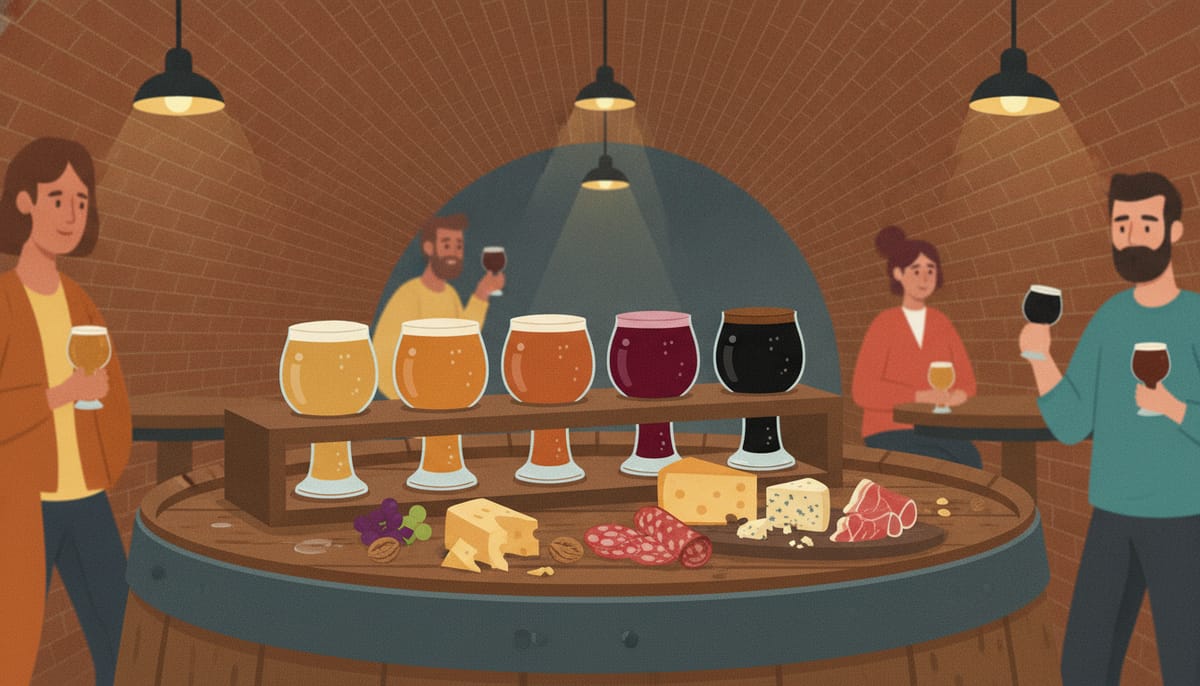
Beer tasting isn't just for experts. A little know-how turns any pint into something you can actually appreciate and talk about — and it makes a brilliant day out. This beginner's guide covers how to taste beer properly, the main styles to know, the vocabulary to use, how to pair beer with food and cheese, and the best places to do a beer tasting in London.
How to taste beer in four steps
Tasting beer is the same idea as tasting wine — slow down and pay attention. Follow these four steps:
- Look. Note the colour, clarity and head. Is it pale gold or deep brown, crystal clear or hazy? The appearance sets your expectations.
- Smell. Give the glass a gentle swirl and take a good sniff. Aroma is most of flavour — look for hops (citrus, pine, tropical fruit), malt (bread, caramel, chocolate), yeast (banana, clove, farmyard) or added fruit and spice.
- Sip. Take a decent mouthful and let it coat your whole palate. Notice sweetness, bitterness, sourness, body (thin or full) and carbonation.
- Finish. How long do the flavours last after you swallow, and what makes you want — or not want — another? The finish tells you a lot about a beer's quality and balance.
The main craft beer styles
You don't need to memorise dozens of styles. Get to grips with these families and you'll navigate any taproom menu:
- Lager & pilsner: crisp, clean and refreshing — a great warm-up and a benchmark for brewing precision.
- Pale ale & IPA: hop-forward, ranging from citrussy and bitter West Coast IPAs to soft, juicy, hazy New England styles.
- Sour & saison: tart, funky and food-friendly — brilliant for resetting the palate mid-session.
- Porter & stout: rich, roasty and chocolatey, sometimes barrel-aged — the perfect finisher.
- Bitter & cask ale: the classic British pub styles, balanced and sessionable, often served cooler and less fizzy.
- Wheat & Belgian styles: spicy, fruity and aromatic, from German hefeweizen to Belgian tripels.
A quick beer tasting vocabulary
A few words will make you sound — and taste — like you know what you're doing:
- Body: how heavy the beer feels, from light and watery to full and creamy.
- Dry vs sweet: whether it finishes crisp and clean or rich and sugary.
- Bitterness (IBU): the hop-driven bite that balances malt sweetness.
- Dry-hopped: hops added late for aroma without extra bitterness.
- ABV: alcohol by volume — worth watching when you're tasting all day.
The right glass matters
Glassware genuinely affects how a beer smells and tastes. A tulip or teku glass concentrates aroma; a tall pilsner glass shows off clarity and carbonation; a snifter suits strong, boozy beers. You don't need a cupboard full — but it's why a tutored tasting often pours into proper glassware rather than a standard pint pot.
Beer and cheese: the perfect pairing
Beer beats wine with cheese more often than people expect — the carbonation and bitterness cut through fat beautifully, and the flavour range is enormous. A few reliable matches:
- Hoppy pale or IPA with a sharp, mature cheddar.
- Stout or porter with a creamy blue.
- Saison or sour with a soft goat's cheese.
- Malty amber ale with a nutty alpine-style cheese.
Our Cheese, Meat & Beer Tasting does exactly this — three craft beers paired with three British cheeses from Neal's Yard Dairy and three cured meats, with a guide to talk you through each match.
Spotting off-flavours
Part of tasting is knowing when something's not right. Wet cardboard suggests oxidation; a buttery, slick character points to diacetyl; a skunky note often means light-struck beer. You don't need to be a qualified judge, but recognising these helps you appreciate fresh, well-kept beer — exactly what you get straight from the source on the Beer Mile.
How a guided tasting works
On a guided tasting, a host pours a flight of contrasting beers in a sensible order, explains what to look for in each, and answers your questions. It's relaxed, sociable and a fast way to learn — far more memorable than reading about it. Add food, and the pairings bring everything to life.
Where to do a beer tasting in London
The Bermondsey Beer Mile is the obvious home of beer tasting in London — dozens of breweries pouring fresh, in one walkable place. Doing it as a guided beer tasting tour in London means someone walks you through every glass, so you actually learn rather than just drink. For a more structured, seated experience, a dedicated beer and cheese tasting is ideal — and great for couples and groups. See our best breweries guide for what to order.
Tips for hosting your own tasting
- Pour small measures so everyone can try several beers.
- Go from light to dark, dry to sweet, to avoid blowing out your palate early.
- Have water and plain crackers to cleanse between beers.
- Serve at the right temperature — most craft beer is best a little cooler than room temperature, not ice cold.
- Take notes — even a word or two per beer helps you remember what you liked.
Common beer tasting mistakes to avoid
- Serving too cold: ice-cold temperatures mute aroma and flavour — let bigger beers warm slightly.
- Starting with the strongest: a big stout or DIPA first will flatten your palate for everything after.
- Drinking too fast: tasting is about attention, not volume — small measures, taken slowly.
- Ignoring the glass: a proper glass really does reveal more aroma.
- Skipping food and water: both keep your palate sharp and the day enjoyable.
Make it an occasion
Beer tasting is even better shared. Whether it's a date, a birthday or a team social, a guided tasting gives everyone something to talk about and a reason to slow down and savour. Our Cheese, Meat & Beer Tasting and Bermondsey beer tasting tour both build the learning into a genuinely fun day out — and groups are very welcome.
Give the gift of a tasting
A guided beer tasting is also a thoughtful gift for any craft beer fan. Our gift vouchers can be put towards a tasting or a tour, arrive instantly by email and are never expire — see more gifts for beer lovers for inspiration.
Make a day of it
The link below is an affiliate link: if you book through it we may earn a small commission at no extra cost to you.
- Borough Market Food Tour (6+ tastings) — pair a beer tasting with a guided food graze through Borough Market for the full London food-and-drink day.